Athens2006 Course
1. Brief
2. Methods
3. Principles
4. Intelligence
5. Modelling
6. Geospatial
7. Satellite
8. Economics
9. Data stack
10. Spills
11. Integration
12. Prospect
13. Development
14. Future
13. Cameroon-Chad development challenges

Cameroon and Chad
Socio-political challenges of economic development
J-C Carret - ENSMP – CERNA, Paris - France
L. Feckoua - University of Paris X, Nanterre - France

Topics on Cameroon :


Topics on Chad :


 1 - Cameroon in brief (1998)

    • Area : 475 000 km2
    • Population : 13.6 millions habitants
    • GNP : US $ 8.7 billion
    • GNP per capita : US $ 610
    • Life expectancy at birth : 57 years
    • Access to safe water : 41 % of population
    • Gross primary enrolment : 89 % of population

    http://www.worldbank.org/afr/

 2 - Comments : an historical perspective

    • Until the early 1980s, Cameroon was one of Africa's success stories with an annual growth rate averaging 7% and per capita income averaging about US $ 1100.
    • Starting in 1985, 3 major economic shocks exposed the underlying weaknesses of economic structure and policy :
    • Sharp decline in coffee, cocoa and crude oil prices led to a 60% erosion in trade balance by 1988
    • Oil production started to decline sharply
    • Real exchange rate appreciated by 60% between 1985 and 1988, greatly weakening the country world market competitive position improving since

 3 - Economic structure (1998)

    • Agriculture (% of GDP) : 42.4% (+3.9%)
    • Industry: 21.6% (-4.3%) : including Manufacturing : 10.6% (-1.6%)
    • Services : 35.9 % (-1.7%)
    • Agriculture provides employment for about 60% of the population of Cameroon
    • Exports : 50% from oil ($ 600 M) and timber is also a major source of income ($ 200 M)

 4 - Agriculture : A vital resource

  • Main commercial crops in Cameroon are cocoa, coffee, tobacco, cotton and bananas.
  • Smaller commercial productions are rubber, palm products and sugar cane.
  • Subsistence crops include plantain, sweet potato, cassava (manioc), corn and millet
  • Livestock is important in the North part of the country.

 5 - Structural adjustment

    • Total debt : US $ 9.6 billion (110% of GDP)
    • Total debt service : US $ 659 M (27% of total export of goods and services)
    • The country is under an economic reform program supported by IMF and an IDA-World Bank structural adjustment credit
    • The goal is to maintain an economic growth rate of 5% in order to reduce poverty significantly

 6 - Corruption

    • The corruption perception index (CPI) ranks countries by degree of perceived bribe-taking (public official abusing their office for personal gain)
    • In 1998 and 1999, Cameroon has been ranked by Transparency International as the World's most corrupted country among 98 others, even before Indonesia and Nigeria.

    ( http://www.transparency.de )

 [Top of Page]

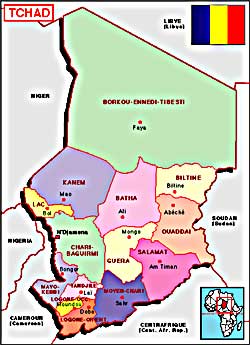
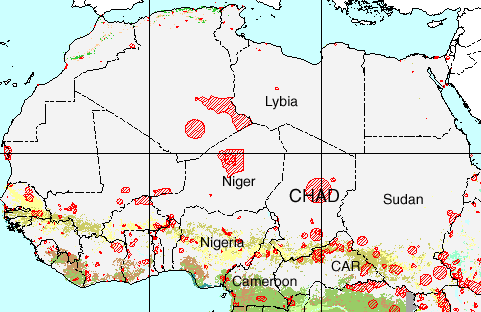
 7 - Chad regional geography

Chad is a landlocked country in the middle of Central Africa
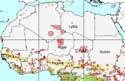
Chad in the middle of Central AfricaChad in the middle of Central Africa 

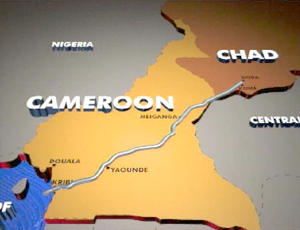
 8 - The Doba project - A direct access to the ocean

The Doba-Kibi pipeline and its associated infrastrutures will offer an access to the Atlantic ocean.
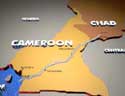
The Doba-Kribi pipelineThe Doba-Kribi pipeline 

 9 - Chad : A bipolarised country

  • North
  • Deserts and mountains
  • Nomadic population
  • South-West
  • Lake Chad and river system : Chari, Logone
  • Flood plains
  • Agriculture

 10 - The geographic legacy of colonial expeditions

  • Long centuries of slavery raids from Arab-Turk traders
  • Surveyed by colonial expeditions in the late 1800s.
  • Definitely integrated into French colonial empire in early 1900s
  • Expeditions conducted from rivers : Niger, Benue and Congo
  • River route projects

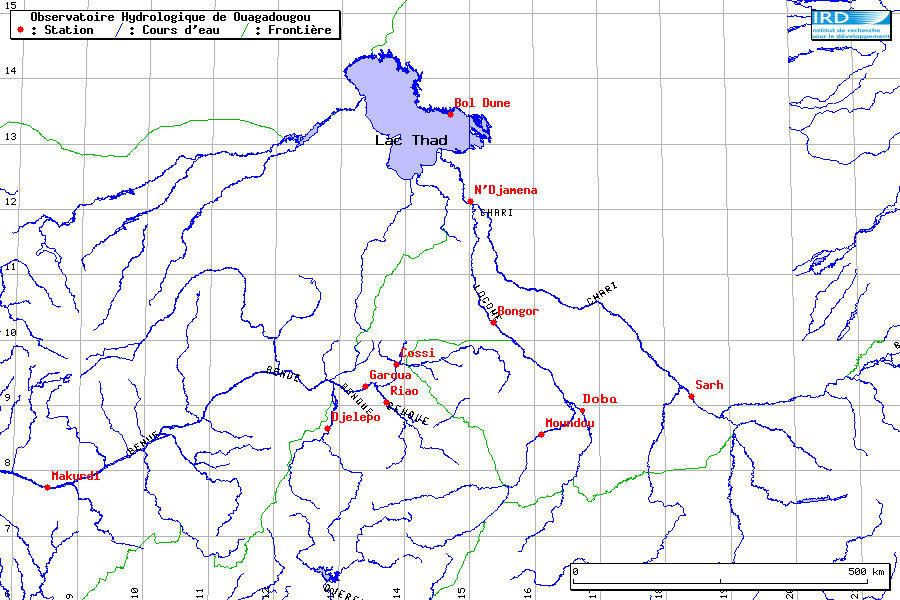
 11 - A vast fluvial system

Lake Chad drains a vast fluvail system with two large rivers : Chari and Logone.
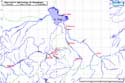
Lake Chad fluvial systemLake Chad fluvial system 

 12 - The South : diversified land use

  • The most populated areas
  • Agriculture on uplands
  • Extensive cattle ranging in lowlands flooded during the rain season
  • Natural reserves in flood areas and uplands (Ex : Manda )

 13 - Governance

  • Independence: August 11, 1960
  • President I. Deby established by coup on December 2, 1990
  • Elected national assembly with opposition leaders
  • Human rights at stake
  • French army stationed in Ndjaména since independence.
  • Conflicting relations with neighbours : Lybia, Sudan.
  • Decent relations with Nigeria
  • Better commercial/political relations with Cameroon and CRA.

 14 - Chad – Challenges of oil development

  • A landlocked country in need of direct export opportunities
  • Bipolar geography : North/South both landscape and socio-economic life
  • A large drainage basin to Lake Chad with major rivers and flood plains
  • Agriculture development is the South but also competition for land
  • Governance still troubled by opposition parties, poverty, health….

[Top of Page]


Geointelligence - ATHENS Course 2006 - NTNU/ENSMP - Contact web master - Last update : 6 March 2006